

When scaling a business in today’s digital landscape, founders often ask: should we invest in performance marketing vs organic SEO? It is a common dilemma, especially for local Thrissur businesses and D2C brands looking for steady growth.
In this post, you will learn the exact differences between paid advertising and search engine optimization. We will break down the timelines, costs, and unique advantages of both approaches.
By the end of this guide, you will know exactly how to balance immediate ad returns with compounding organic search for maximum revenue.
The Immediate Impact of Performance Marketing
Performance marketing relies on unit economics and precise audience targeting. It is designed to provide immediate customer acquisition and instant validation for your products.
Platforms like Google Ads and Meta allow you to drive highly targeted traffic to your website within 24 to 72 hours. You only pay for specific, trackable actions like clicks or conversions.
However, performance marketing means you are effectively “renting” your audience. The moment your ad spend stops, the traffic and lead generation instantly vanish.

Building Permanent Equity with Organic SEO
Organic SEO builds evergreen, defensible digital real estate for your brand. It involves earning visibility through technical site health and authoritative content.
While it requires a 6 to 12-month runway to build domain trust, SEO generates leads at a significantly lower cost. According to Search Engine Journal, organic search drives over 50% of all trackable website traffic.
An effective SEO strategy drastically lowers your Blended Customer Acquisition Cost (CAC) over time. Once you rank, you don’t pay for every individual click.
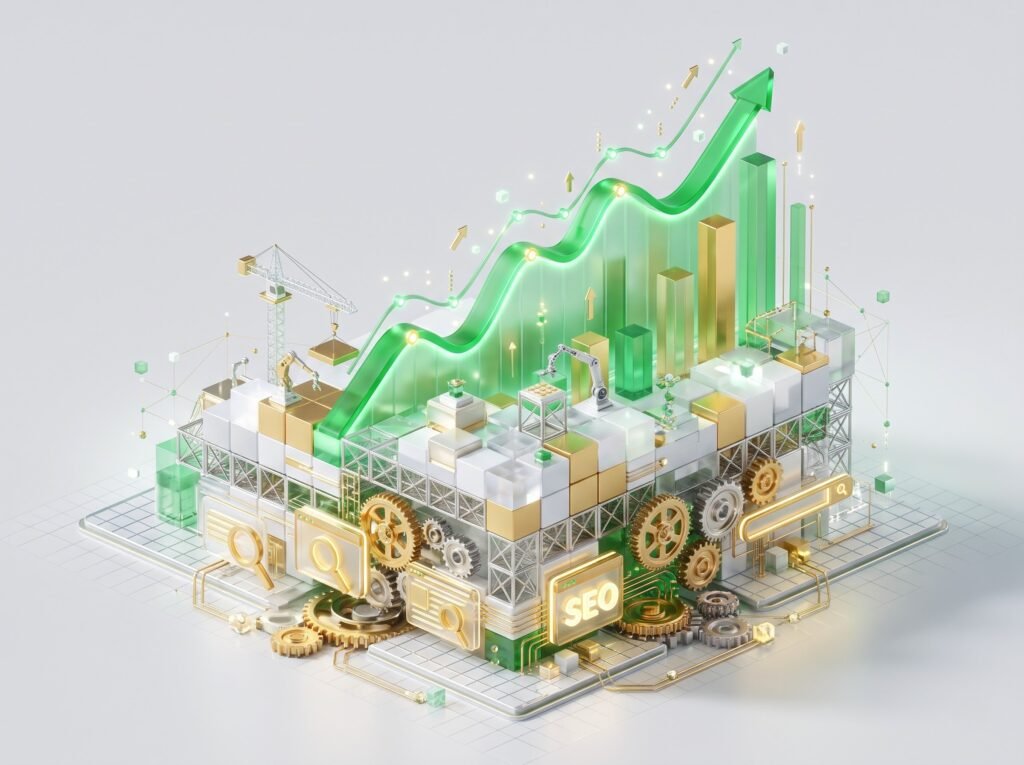
Performance Marketing vs Organic SEO: The True Cost
When comparing performance marketing vs organic SEO, the biggest difference lies in how your money works over time.
Standard paid search campaigns average a 2:1 return. Unfortunately, rising cost-per-click (CPC) rates can continuously eat into your long-term profit margins.
SEO requires an upfront investment in content architecture before generating revenue. However, an SEO strategy that yields a 2:1 return in year one might scale to 15:1 by year three.
[Image: A graph comparing the flat cost of SEO versus the rising cost of paid ads over time | Alt text: Line graph comparing long-term ROI of performance marketing vs organic SEO]
How to Combine Both for Maximum ROI
Top-performing digital strategies do not choose between paid and organic. Instead, they integrate both to build a full-funnel growth engine.
Step 1: Validate with Paid Ads
Use performance marketing to test ad creatives and discover high-converting search queries. This gives you immediate cash flow and valuable data.
Step 2: Scale with Organic Search
Take those high-converting queries and use them to dictate your SEO content roadmap. This allows you to build permanent authority around the keywords you already know drive sales.
For more details on building a website that turns this traffic into sales, Connect with us.
Conclusion: Choosing the Right Growth Engine

Pitting paid ads against organic search is a flawed framework. Performance marketing funds your short-term growth, while SEO builds the permanent brand equity that sustains your business.
Together, they create a comprehensive digital strategy that scales seamlessly.
Want help with this? Explore our SEO services to see how we build long-term traffic, or Contact us to book a free consultation with Shot Break Digital today.